Tag:

Health

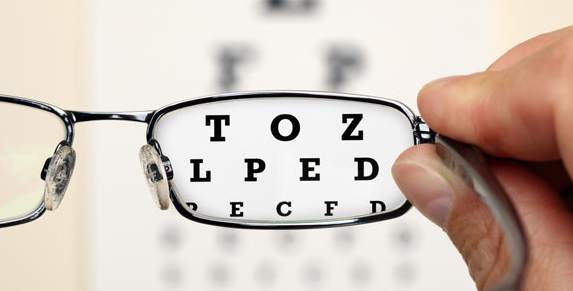
The eye doctor you pick is dependent on the health needs and the overall condition of the eyes. For basic eye care, you can go to an optometrist, but when it comes to eye or visual consultation, an eye doctor or specialist is your best option.

Through an online search, there are many types of optometry specialists, this means it might be confusing in whom you must approach.

These are several of the optometry specialists you may consider:

Optometrists – are eye care professionals who focus in examining eyes for vision problems. Similar to ophthalmologists, they also correct refractive errors by giving contact lenses or eyeglasses to patients. You may also visit them if you need vision therapy or low vision care. They do not conduct operation but may participate in a patient’s pre- or post-operative care. Optometrists are also qualified to fit contact lenses.

Ophthalmologist – is a medical doctor (MD) who specializes in surgical and medical procedures. Ophthalmologists are the best option for patients with eye injuries, eye disease, or even complicated vision concerns. They are trained to perform eye examinations, prescribe medications, and perform eye surgery. You may also approach them when you need prescriptions for eyeglasses or contact lenses.

Opticians – are technicians skilled and knowledgeable in designing, verifying and fitting contact lenses, eyeglass frames, eyeglass lenses, as well as other devices to correct a patient’s eyesight. Opticians are not permitted to treat as well as diagnose eye diseases.

We all depend on our eyesight from the moment we wake up in the morning up until we sleep at night. Without better vision, one’s ability to read, watch, or drive can drastically change. In addition, certain changes in our vision can also cause other health issues such as migraine. There are a lot of health factors that can affect our eyesight if we do not take care of them, such as high blood pressure and diabetes. You may also have higher risk in getting certain eye conditions if you have a family member with eye disease. Most of the time, eye problems are unnoticeable and are hard to detect. Thus, it is advisable to have your eyes checked by an ophthalmologist or an optometrist, especially if you are aged 40 or above. This is to stop any eye problems from occurring or worsening. Annual exams are advised even if there is no pathology after carrying out a through eye exam.

Other factors that may help you find the reliable doctor are:

Family, relatives, or friend’s recommendation – know anyone using prescription glasses or contact lenses? Ask their opinion for a trusted eye doctor in the area.

Your current doctor’s recommendation – if you already have a reliable pediatrician or obstetrician/gynecologist, you may inquire them for recommendations. He or she will surely have a list of doctors you can trust. Knowing you as well as your family’s health history, they would also have an idea of who would be right for your needs.

Professional organizations’ recommendation – if you still could not see an eye doctor that match your needs, you may visit the sites of known organizations in your country. They can offer ways for you to find the ideal local eye doctors in your area.

Contact Atlas Eye for quality eye services at great prices. You may also visit their site for more information.

0 comments
0 FacebookTwitterPinterestEmail

When it comes to vision and eye condition, everyone is not the same. Your vision may feel totally fine but this does not mean that you do not need to get them checked. Eye exam is not just for those who have prescription eyeglasses and poor vision. Many eye conditions do not have any signs or symptoms until you reach late stages. Through such exam an eye specialist can help you prevent eye complications from developing or worsening and could detect other health concerns such as diabetes or hypertension.

To make sure your eyes are healthy, you can take a comprehensive eye examination once every 2 years. But, for those who have existing eye conditions like refractive error (myopia, hyperopia, or astigmatism), glaucoma, cataract, or diabetic retinopathy are advised to have a more frequent exam. The frequency of your review will be based on your eye specialist, so make sure to call them up to ask on the most appropriate review schedule.

There are chances when you will need to go to your eye doctor even if you are not yet set for an exam. In case you experience the following  signs, don’t think twice and go to your optometrist or ophthalmologist:

Sudden appearance of visual disturbances

Another sign that you should not miss is when there is a sudden appearance of visual disturbances such as floaters or flashes of light. This could be a symptom of a serious vision-threatening disorder such as retinal detachment or retinal tear or hole. Once you feel this, seek immediate medical attention with an eye specialist within twenty-four hours or less.

Having a tough time focusing or blurring of vision

If you are having a tough time focusing or you experience immediate blurring of vision, these may be signs of a more serious health issue. Do take this seriously even if the blurry vision comes or goes, or only happens to 1 eye. Be sure to schedule an eye exam with an ophthalmologist or optometrist to determine if you will need prescription glasses or there are other underlying eye concerns responsible for that.

Gradual vision blurring

This sign gradually happens over time so some patient may simply ignore it. However, once you notice that your vision is not as sharp as before and you are having a hard time reading books or watching TV, it’s time to have your eyes checked. Patients with cataracts often present with this complain. With eye exam, your doctor can help you detect and cure the condition early.

Squinting

Squinting is probably the most common and obvious sign that your vision is not as sharp as it is before. By squinting, you can reduce extraneous light entering your eye and it can reduce light scattering, making it easier to read or see objects. Squinting is often an early sign that one needs an eyeglasses or needs to have an eye exam.

Eye Pain, discomfort

Eye pain or discomfort should not be taken lightly.. It may be due to dry eye, seasonal allergies, eye infection or inflammation. But if it is an ongoing discomfort, it’s now a good idea to get it checked out by a specialist, as it can be treated by medicated eye drops.

Headaches or migraine

Sudden and frequent headaches are another sign of vision problem. It may be a warning sign to more serious condition such as glaucoma or tumor. Be sure to seek medical attention to rule out any serious ocular involvement.

Looking for a reliable eye specialist in Singapore? Visit Atlas Eye’s website for quality eye exams at reasonable rates.

0 comments
0 FacebookTwitterPinterestEmail

LASIK means laser-assisted in-situ keratomileusis. It is an eye surgery that is performed to reduce or totally remove the need for corrective eyeglasses or contact lenses.

This eye surgery is 1 of the most common types of refractive methods; it uses lasers to reshape the cornea or the dome-shaped transparent tissue at the front of the eye. This change in cornea shape allow light rays to focus more properly on the patient’s retina rather than at certain point beyond or in front of their retina. If light rays do not focus on the retina, one will experience blurred vision. In conclusion, LASIK is performed to help patients achieve clearer as well as sharper vision without any use of optical aids.

Who must get a LASIK surgery?

If you have any of the following conditions, your eye doctor may suggest for you to first try other ways of repairing the vision such as using of corrective eyeglasses or contact lenses. However, if you find eye glasses as well as contact lens are enough this is where LASIK comes in.

A patient has hyperopia / farsightedness – this occurs when the patient’s eyeball is shorter than typical or when the cornea too flat, the lightrays that enters the eye are focused behind the retina instead of on it. Patients may see distance object well but have a hard time focusing on near objects. Some may also feel eye strain, fatigue and headache while reading up close.

A patient has myopia / nearsightedness – nearsightedness or myopia happens when the patient’s eyeball is longer than what is normal or when the cornea curvature is too steep. These outcome in light rays being focus in front of the retina and thus distant vision is blurry. The person can clearly see objects that are close, but having a hard time seeing those that are far away.

Astigmatism – astigmatism is an imperfection in your curvature of the cornea. Instead of a symmetrically round shape such as a baseball, it is irregularly shaped like a ruby ball. This outcome is the multiple focusing of light rays, causing blurred or distorted vision at both far and near distance.

Those who are at their 40’s or above may struggle with focusing on nearby objects. This condition is known as presbyopia, which results in difficulty of doing close-up tasks or reading small print. As part and parcel of aging, presbyopia will gradually worsen as one age. . LASIK surgery is known for helping people with presbyopia to have clear distance vision, but does not eliminate presbyopia. However, there are other strategies that maybe suitable for people with presbyopia. Be sure to consult an experience refractive surgeon’s advice before you decide to undergo a surgery.

Here are other risks LASIK eye surgery carries:

Under corrections, overcorrection or regression occurs if too little or too much cornea tissue are removed or the eye healing process is not typical. In such cases patient will not be able to enjoy 6/6 or perfect vision. Enhancement surgery may be performed to correct the remaining refractive error.

Halos, glare, and double vision – LASIK surgery may result to a patient having difficulty seeing at night due to glare, double vision, or halos around bright lights. These tend to be more prominent right after the surgery and will improve with time.

Eye Infection may occur after LASIK surgery however they are rare. It is important to use the medicated eye drops as directed by your eye surgeon to avoid infection and control inflammation as your eye heals.

To avoid any of these risks, choose the right doctor for eye exam and eye surgery procedures. Contact Atlas Eye for any inquiries you have about eye services.

0 comments
0 FacebookTwitterPinterestEmail

LASIK or laser-assisted in situ keratomileusis is the most popularly performed eye procedure that treats different eye conditions which includes myopia or nearsightedness, hyperopia, or even farsightedness, and astigmatism. It reshapes one’s cornea to enable the light that is entering a patient’s eye to be properly focused onto the retina, achieving clearer vision. LASIK eye surgery can be completed in just 30 minutes for both eyes. It is also pain free, making it a popular choice to most patients. What’s more is that the results can be felt and seen within twenty-four hours.

It is important to check with a reliable eye specialist before deciding to undergo eye surgery, as not all patients are a good candidate for the LASIK procedure. If you are not a good fit for the procedure, you may be advised to a various vision correction surgery available. Your doctor may suggest PRK Photorefractive Keratectomy, LASEK Laser Epithelial Keratomileusis , Small Incision Lenticule Extraction ReLex SMILE eye surgery or  phakic IOL implant surgery. The eye doctor will determine if any of the mentioned procedures is suitable for your eye condition.

How does LASIK surgery work?

During LASIK eye surgery, your eye specialist will use either a mechanical surgical tool called microkeratome or a femtosecond laser in order to create a thin, circular flap in the cornea. The flap is fold back at the hinge to get the stroma or the underlying cornea. The excimer laser is a very specialized laser that uses a cool ultraviolet light beam is applied to ablate or eradicate microscopic amounts of tissue from the cornea. This will help reshape the cornea so it can accurately focus light on the retina and improve your vision. The aim for nearsighted person is to flatten the cornea and for far sighted patients is to steepen the cornea.

Aside from correcting for near as well as farsightedness excimer lasers can correct astigmatism. It works by smoothening the irregular cornea back to its regular shape. Once the laser has reshaped the cornea, the flap is then laid back in place to let the cornea to heal naturally.

What to do after the surgery

When you doctor has already completed the LASIK surgery, he or she will ask you to rest for 30 minutes or so. This is because you may still feel a temporary stinging or burning sensation in your eyes following the operation. Your doctor will also conduct a brief post-operative examination. Do raise any problems to your doctor before being discharged for the day.

After the operation, you will still see blurry vision or haziness. The clarity of your vision should improve by the following morning. It should continue to improve and stabilize within a couple of days to weeks following the operation. In different cases, it may still take several weeks or even longer for the patient to see the results.

While most patient experience good vision the following day, most eye surgeon may still advise you to rest for a few of days before returning to work. Your doctor will schedule a post op examination the next day after the surgery to observe your recovery. Bear in mind that you also need to avoid any strenuous exercise for at least a week, as such activity can traumatize the eye and disrupt the recovery process.

For any LASIK eye surgery questions, don’t hesitate to contact Atlas Eye. Visit their site to learn more about their services.

0 comments
0 FacebookTwitterPinterestEmail

ReLEx stands for Refractive LEnticule Extraction, while SMILE is for SMall Incision Lenticule Extaction. This is the latest laser surgery technique used to treat shortsightedness, whether or not the patient has astigmatism. In this particular procedure, your surgeon will make a small 3-4 mm cut or possibly a keyhole inside the periphery in the cornea. Employing a machine referred to as Visumax, the laser can produce a skinny disc of tissue or lenticule inside the intact cornea. This lenticule is going to be extracted using the peripheral keyhole cut. Relex Smile procedure does not have flap, so it avoids risks and complications related to LASIK treatment. Many patients prefer laser treatment since it is faster, and keeps the cornea intact and much more effective.

Similar to if you will undergo other surgeries, it’s also wise to be familiar with challenges of Relex Smile. This enables you to weigh the advantages and disadvantages from the surgery. These risks include:

• Corneal edema
• Cap tear
• Lenticule rupture
• Interface inflammation
• Diffuse lamellar keratitis (DLK)
• Transient epithelial dryness
• Interface infiltrates
• Loss of best-remedied visual skill
• Blurred vision
• Haze

  • Epithelial abrasions
    • Small tears within the cut site
    • Opaque bubble layer
    • Undercorrection
    • Difficult lenticule extraction
    • Suction-loss during surgery
    • Perforated cap
    • Corneal abrasion

    You’ve now learned the hazards from the procedure, the following goal is determine if you are able to undergo this surgery. This is a report on qualifications for Relex Smile.Patients who’re 18 years of age and above, and are afflicted by astigmatism additionally to nearsightedness or myopia can undergo Relex Smile. This method is certainly a rewarding option for patients who would like to avoid any risks, which include flap dislodgement in LASIK surgery. In situation you are not a job candidate for Relex Smile, listed below are other available choices:

    • Implantable Contact (ICL) – patients rich in myopia aren’t able to undergo certain eye surgeries for instance PRK, Relex Smile, or LASIK. However, they could be able to have Implantable Contact or ICL because it is well suited for individuals who’ve high short-sightedness of 800 levels or higher.

    • Photorefractive Keratectomy (PRK) and Epikeratome Laser-Aided Keratomileusis (Epi-Lasik) – these choices highly recommended for patients that have thin corneas. Inside the Epi-Lasik and PRK, there is no flap involved.

    • There are numerous eye care centres in Singapore that provides Relex Smile services, only handful of are dependable. To really are fit to pass through this operation, make certain to go to a professional eye care center like Atlas Eye. The organization could be the only private specialized eye care center in Singapore. It’s individually managed exclusively with several qualified ophthalmic surgeons. Their team’s experience and skills inside the eye care industry make certain they are a good choice for almost any eye care services you may have.

    • Headed by Dr. David Chan, their well-trained employees are famous for offering quality service whatsoever occasions. Dr. David Chan can be a Medical Director plus a senior Consultant Eye Surgeon who finished the school of Leicester Med School, United kingdom. He even acquired postgraduate levels in Ophthalmology within the National College of Singapore as well as the Royal College of Surgeons Edinburgh, Scotland. Dr. Chan can be a proud part of different worldwide ophthalmology societies such as the American Academy of Ophthalmology, the Asia Off-shore Society of Cataract and Refractive Surgeons, as well as the American Society of Cataract and Refractive Surgeons.

    • Visit Atlas Eye today to learn more regarding services.

0 comments
0 FacebookTwitterPinterestEmail


After a Relex Smile surgery, many patients think they no longer need to go to an eye care center to get their annual examination. Most of them are contented with the results of the operation so they think that they can just forget about follow-up examinations. However, even if they do enjoy 20/20 vision as well as the ease of not wearing eyeglasses and contacts, they still need to visit an eye doctor on a yearly basis. This can be so both of you can maintain the fitness of how well you see and search if there is complications following a operation. This could also enable your eye specialist to think about eye illnesses that could affect your eyesight and general health. These illnesses include glaucoma, cataracts, macular degeneration, far more. Generally, these eye problems do not have symptoms until it starts within your lifestyle or cause permanent vision loss. Obtaining a yearly eye check-up may be the best protection against the eye illnesses whether you most likely did undergo a Relex Smile surgical treatment or not.
Ideally, a yearly eye exam can help you be sure that the eye health is not at risk. Lots of people may need to schedule more than 1 exam every year, with regards to the condition from the eyes or general health. Your eyesight can transform just a little or dramatically in the period of yearly, most specifically if you are half a century old and above. Listed here are a couple of signs you need to regularly come with an eye exam:

1.Your eyes are itchy, dry, and reddish
2.You’re seeing glares, flashes regarding, spots, or floaters
3.Recurring vision problems
4.Developing diabetes or glaucoma
5.It’s been a year since your last eye exam
6.You are having a hard time seeing at night
7.You can’t or you’re getting difficulty driving throughout the night
8.You’re having difficulty seeing street signs at night time or throughout the night.
9.We have spent hrs before your personal computer or studying books, you’ve headaches, eye strain, or blurred vision
10.You obtain dizzy or motion sickness when attempting to look at a moving target
11.You have to move books or perhaps the newspaper even further to determine
12.You squint or close one eye to determine clearly
You don’t need to restrain of those signs to occur prior to getting a wrist watch exam. Bear in mind that the eye exam has more benefits than you can expect. It assists to identify a range of illnesses for instance diabetes or cancer. Whenever your surgeon or eye care company supplies a lifetime commitment on aiding you along with your laser-remedied vision results, you might want to provide an annual eye exam that you ought to remain qualified for future enhancements.

Despite effective Relex Smile surgery, you’ll probably still need future enhancements and have to use glasses for many activities to find out clearly. You might want to placed on it you read or drive, as the vision may deteriorate when you age. Ask your talent surgeon to talk about your alternatives together with you to be able to better determine what will work best with your condition.

Contact Atlas Eye to understand more about Relex Smile surgery. You may also go to the website or call their office to schedule a consultation.

0 comments
0 FacebookTwitterPinterestEmail


One of the most popular ways to treat refractive errors is LASIK surgery. For people who are not familiar with this method, it’s a permanent eye surgery that’s carried out to reshape the cornea and correct a patient’s vision. The surgery will correct the incoming light like the way your eyeglasses or contacts were before. Due to its advancement, many people now determine whether they need to get LASIK surgery to possess better vision.

That will assist you made the decision whether you will need LASIK surgical procedure or otherwise, listed here are the very best ten primary explanations why it must be:

1. Instead of buying eyeglasses or contact lenses, many patients decide to invest on LASIK. In case you accumulate the price on buying prescriptions round the yearly basis, the price can bond in what one covers a LASIK surgery.

2. You can wake up every day and uncover everything clearly without coping with invest time looking for the eyeglasses or putting your contacts in.

3. In addition you don’t have to be concerned about coordinating your outfit together with your eyewear. Even when you are attending a gathering, you will not be hassled by eyeglasses or contacts.

4.Patients who want to maintain or begin an active lifestyle may also find out how LASIK may well be a big help. Everyone knows how difficult or impossible it’s to start any sports while putting on prescription contacts or eyeglasses. If you’re always concerned about losing your contacts while swimming or surfing, LASIK surgery might make everything a great deal simpler personally. You can surf, swimming, or dive with no fuss while not extra money buying prescription goggles.

5.It’s not necessary to buy eye drops for dried up contacts.

6.Traveling is going to be simpler since supplying need to bring some contacts or eyeglasses while on the highway.

7.Ignore discomforts introduced on by eyeglasses or contacts. Everyone sees that eyeglasses can every so often cause headaches due to slightly off prescription or pressure. For contacts, you will get itchiness, red eyes, cause allergy signs and signs and symptoms, along with other irritations. With LASIK surgery, you won’t have these concerns again.

8.Some patients love to have better vision in comparison to putting on eyeglasses.

9.Patients will enjoy instant gratification, as LASIK doesn’t need extended recovery occasions. After a couple of hrs, you can home seeing the advantages of the operation. You can walk around your home feeling much better with regards to your decision.

10.It’ll increase your confidence.

If you’d like to understand more about LASIK surgical procedure or visit a professional with regards to laser treatment, don’t hesitate to call Atlas Eye. The business could be a Singapore-based ophthalmology specialist center that provides high quality and evidence-based strategies to their sufferers. They normally use the benefits of technology advances to make certain that individuals to enhance leads to delivering eye health enhancement or rehabilitation. Dr. David Chan, who’s a clinical Physician along with a Senior Consultant Eye Surgeon, forefronts their quantity of staff. He’s properly been trained in Anterior Segment Surgery, Complex Cataract Surgery, additionally to Refractive surgery inside the College of Calgary in Canada along with the Singapore National Eye Center.

Atlas Eye is a perfect option for LASIK surgery. Visit Atlas Eye today for more information on their expertise. You may even visit the how do people plan a consultation.

0 comments
0 FacebookTwitterPinterestEmail


If you are looking for ways to improve your vision, one option you have to consider is LASIK surgery. LASIK Singapore cost ranges from $3500 all the way to $6500. The cost may differ based on how much you’ll need vision correction and how difficult the procedure will be. The technology used with the surgery might also affect the price of the operation.

Nowadays, eye care centres offer LASIK with a variety of using Microkeratome or IntraLase. It is an oscillating blade that is frequently accustomed to produce the corneal flap while IntraLase uses laser – a much more precise method generally shown to have less complications and vision quality. However, the LASIK Singapore cost for IntraLase costs 30% more in comparison to standard LASIK.

You may even encounter the word Wavefront while discussing the process together with your physician. It is really an advanced measurement system, used to create a 3D map in the patient’s eye. It is guide for the laser in reshaping the cornea. Furthermore with this is the fact Wavefront can treat eye difficulties for example glare, shadows and halos. This type of LASIK costs about 50% greater than average LASIK.

What are possible undesirable results of LASIK surgery?

If you’re interested to get LASIK surgery, it’s also advisable to see whether this process includes any undesirable effects. Undergoing an analysis relating to this enables you to certainly get ready for the conclusion be a consequence of the procedure. Listed below are the following undesirable effects or complications, which you might experience transporting out a LASIK surgery:

Temporary discomfort – someone may feel burning sensation or itchiness carrying out a surgery. Mild eye illnesses like light sensitivity can also be expected. These discomforts are normal and could eventually fade. It will be simpler to continually the eyeglasses provided from your personal physician carrying out an operation so that you can avoid accidentally rubbing or touching your eyesight. Rubbing or touching it might dislodge the flap, causing your eyesight to not heal correctly.

Seeing visual disturbances – expect seeing some visual disturbances for example glares or halos in low-light environments after your operation. This occurs to several patients especially at night time. It might occur an initial number of a few days carrying out a surgery but is generally resolved in only 3 a few days or fewer.

Complication with flap – within the LASIK surgery, your abilities physician produces a thin-hinged flap in-front the top of cornea to get involved with the stroma (underlying cornea). This is often needed to be able to remove some corneal tissue while using excimer laser. If you wish to understand if there’s risks or complications that’s added to developing a flap, they’re as follow:

• Flaps which are not big enough or too thin

• Buttonholes (small holes or tears in the center of the flap)

• Irregular corneal flaps

• Free caps or flaps with no hinge

Dry eyes syndrome – the eye that experienced the surgery may go through insufficient tear production. This could cause eye discomfort or fuzzy vision. You may also expect the dry eye syndrome to obtain temporary. To reduce the discomfort, your individual physician offer you lubricating eye drops.

If you’re looking for an eye care center in Singapore that provides quality LASIK eye services, you might contact Atlas Eye. The business is famous available on the market since they are suggested for delivering quality service. Their quantity of staff can help you together with your questions on eye care. You may even call work of Atlas Eye to find out more so that you can plan a consultation.

0 comments
0 FacebookTwitterPinterestEmail

LASIK is a surgical procedure that uses lasers to correct vision problems which includes farsightedness (hyperopia), nearsightedness (myopia), and/or astigmatism. Right after this eye surgical procedure, your eye doctor will ask you to rest for a few hours. This is because you may still invariably feel a burning or itching sensation after the procedure. These discomforts are just temporary and will be gone once the patient has rested. Your personal doctor might also provide a brief post-operative examination to make certain everything went as planned. Keep in mind after the operation someone must drive you home since you cannot drive after LASIK treatment. Your eye physician can provide a schedule on when you are in a position to drive again. Your personal doctor will make certain your corrected vision already meets the legal standard for driving. Listed here are a couple of other things you could expect following a LASIK treatment:

• Expect haziness and fuzzy vision right after surgery. This can be temporary and vision clearness will improve in the morning.

• Eyesight continuously improve and stabilize following a few occasions of the surgery. However, you’ll find rare cases that require a few days or longer to find out results.

• You might be better to rest for a couple of days before coming back to work.

• You may be requested to avoid doing strenuous exercises or activities not less than 7 days after your operation. Lifting heavy things or getting some exercise is not allowed since it can traumatize the interest and could affect healing.

• Return for the eye care center the very next day for the follow-up check-up. Here, you physician will try out your vision to see if you can be allowed to drive without contacts or glasses.

Similar to other surgery, do follow your doctor’s recommendations additionally to instructions so you’ll receive the best result of the LASIK eye surgery. Avoid rubbing how well you see, since carrying this out could dislodge the flap.

Which are the long-term effect of LASIK surgery?

LASIK eye surgery has lots of benefits, that’s the reason many professional recommend it. It might greatly improve the grade of information on the individual through getting better vision. You’ll find those who achieve 20/20 vision or better following a treatment, nevertheless the results can invariably vary. You may also have to use prescription contacts or glasses following a laser vision correction.

LASIK procedure possesses an excellent profile in giving patients better eyesight. However, complications for instance infection or night glare continue being possible. Some patients even need a touch procedure or enhancement a few several days following a surgery for the finest results. To acquire favorable results, listed here are the items you may and could not do following a surgery:

• Until the following day, do not take a shower or wash hair

• Be careful when you are inside the bath or bathing. Keep soap out of your eye when washing hair or face.

• Watch out for hairspray or shaving lotion

• Avoid rubbing how well you see not under thirty days

• Don’t drive until your personal doctor gives you a go signal

• Always place on the eyewear your personal doctor gave you

• Avoid pools or saunas for approximately a couple of days

• Do not place on eye make up for 7 days

• Do not get hair treatment not under 10 days

• Avoid dusty environments for approximately each week

For individuals who’ve more queries about how LASIK eye surgery works, make certain to make contact with Atlas Eye. You may also go to the website or call their office to schedule a consultation.

0 comments
0 FacebookTwitterPinterestEmail


Many people ignore symptoms of cataracts since it has minor effect on their vision and starts out very small. A person who is starting to have a cataract may notice that their vision start to become blur than usual, as if looking through an cloudy glass or a cloudy glass. They may also find sunlight too bright, or see glare when looking at oncoming headlights when driving at night. Another indication that you have cataract is when colors no longer look as bright as before. The moment you experience any of these symptoms, do not hesitate to visit your eye doctor so you can inquire whether you are qualified for a cataract surgery or not.

There are three different types of cataracts. It includes the following:

  • Nuclear cataract – this cataractforms deep in the nucleus or central zone of the lens, and is usually due to aging. During the early stage of this cataract, it can bring temporary improvement in your near vision. This condition is also known as a second sight.

  • Subcapsular cataract– this type of cataract occurs at the back of the patient’s lens. Those who have diabetes or taking high doses of steroid for medications are at greater risk of developing a subcapsular cataract. Patients with this type of cataract may have a hard time knowing that they have this condition since it does not produce any symptoms until it is well developed.

  • Cortical cataract – cortical cataract is characterized by white, wedge-like opacities. It starts in the periphery of your lens and then works its way to the center. Cortical cataract occurs in the lens cortex – a part of the lens that is surrounding the central nucleus.

Most cataracts form due to oxidative changes in a human lens. According to nutrition studies, fruits and vegetables that are high in antioxidants can help prevent cataracts from developing or developing. The lens inside our eyes work like camera lens – it focuses light onto the retina for clear vision. This same lens adjusts our eye’s focus, allowing us to see things clearly both far away and up close. It is mostly made of water and protein. The protein works in a precise way that lets light pass through it and keeps the lens clear. However, once we age, protein can clump together, causing a cloud to form in the lens. This is when a cataract starts to form. When not given the proper medical attention it needs, the opacity becomes worse, making it harder to see.

Aside from aging, here are other factors that causes cataracts to form and develop:

  • Prolonged use of corticosteroid medications

  • Statin medicines that are used to reduce cholesterol

  • Previous eye inflammation, injury, or surgery

  • Hormone replacement therapy

  • Ultraviolet radiation from different sources like sunlight

  • Diabetes

  • Family history

  • Hypertension

  • Obesity

  • Smoking

  • Significant or excessive alcohol consumption

  • High myopia

While cataract surgery can help treat this eye condition, you can also prevent it. In a ten-year long study conducted by women health professionals, they have discovered that higher dietary intakes of the carotenoids lutein and zeaxanthin and vitamin E from supplements and food helps to significantly decrease risks of cataract. There are many food with vitamin E, including spinach, kale,almonds, spinach, and other vegetables.

It is also needed to wear protective sunglasses to reduce your complications of cataracts. If possible, use an eyewear that can block 100 percent of the sun’s UV rays.

If you are still searching for an eye specialist in Singapore, look no further than Atlas Eye. Visit their website now for more details.

0 comments
0 FacebookTwitterPinterestEmail