Tag:

Injury

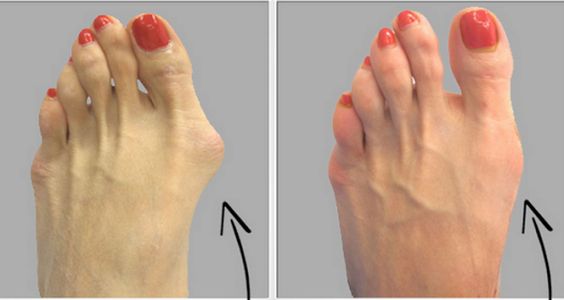
A bunion is characterized by an unnatural and bony hump that develops in the big toe’s base.

It is also sometimes referred to as hallux valgus.

The condition may sometimes result to calluses and can be very painful.

Treatment options for the condition can vary.

It can also range from over-the-counter medications to bunions surgery.

Causes

Some experts believe that narrow, tight, and high-heeled shoes can contribute to the development of bunions.

Other likely causes can include:

  • Inherited foot type
  • Injuries of the foot
  • Congenital deformities

Symptoms

Bunion has several symptoms.

Some of the most common include:

  • Soreness, swelling, and redness in the area affected
  • Bulging bump on the outside of the base of the big toe
  • Thickening of the skin found at the base of the big toe
  • Corns or calluses
  • Persistent or intermittent pain
  • Limited movement of the big toe

Diagnosis

While it’s easy to diagnose bunion based on the unusual shape and the pain, in some instances, other tests might be needed.

For example, the doctor might recommend an X-ray to assess the extent of the deformity.

Blood tests might also be necessary to check if the pain can be the result of a certain kind of arthritis.

Depending on the evaluation, the doctor will decide if orthopedic shoes, medications, custom made inserts, or bunions surgery might be the right treatment option.

While majority of the cases will not require medical treatment, seeking medical attention might become necessary if the following symptoms are present:

  • Persistent big toe or foot pain
  • Bump on the joint of the big toe
  • Limited movement of the big toe or foot

Risk Factors

Some of the most common risk factors for bunion include:

  • High heels – wearing footwear with high heels can force the toes into the front, crowding them in the process
  • Arthritis – pain secondary to arthritis can affect the way an individual walks and can make them more prone to developing the condition
  • Heredity – individuals with structural foot defects that are inherited may be more susceptible to developing the condition

Treatment Options

To reduce swelling and inflammation, over-the-counter pain relievers might be prescribed.

In some instances, a heating pad or a warm foot bath might also offer the much needed relief from the pain and discomfort.

If pain is not consistent and the condition is in its early stage, using the right footwear might be able to help.

Doctors may also suggest using bunion pads, shoe inserts, and splints as long as it will not put pressure someplace else or cause other foot issues.

Surgery for bunions or bunionectomy can also become the likely treatment option for several cases.

Generally, procedure will involve removal or realignment of the soft tissue and the bone.

The primary goals are relieving pain and restoring normal alignment.

Small wires, plates, and screws may be utilized to help hold the bone in place.

In most instances, regional anesthetic is used during the procedure.

Sedatives may also be used.

Typically, the surgery can last an hour or more.

Bunion Surgery Types

There are more than 100 types of bunion surgeries.

However, no type is considered best as surgeries would need to be specific to the condition being treated.

Some of the most common types of bunions surgery are:

  • Exostectomy – this entails removing part of the metatarsal head
  • Realigning of the soft tissues (ligaments) located around the joint of the big toe
  • Arthrodesis or fusion of the big toe joint
  • Osteotomy – involves creation of small cuts in the bones so it can be moved in a normal position
  • Implant insertion of artificial joint

For help with bunions, please visit www.bjios.sg.


0 comments
0 FacebookTwitterPinterestEmail

When cells divide abnormally or uncontrollably, a tumor or a lump is formed.

However, when the tumor or lump develops in the bone, the condition is aptly called bone tumor.

A bone tumor can be cancerous or malignant or it can be benign.

However, when benign tumors grow, they can still end up compressing the healthy bone tissues.

That being said, treatment might still be recommended even if it won’t spread to other parts of the body.

Malignant bone tumors on the other hand can cause the cancer to spread to other parts of the body.

Causes

There have been no definite causes identified for bone tumors.

However, it has been noticed that tumors often occur when parts of the body are experiencing rapid growth

Other likely causes of bone tumors include genetics, radiation treatment and bone injuries.

Symptoms

Often the most common symptom of the condition is a dull ache.

This dull ache is often felt only occasionally but will severe and constant in the long run.

Swelling in the site affected may also be noticed.

Other symptoms include night sweats or fever.

Benign bone tumors however will often not manifest any symptoms and won’t be detected unless an imaging scan is done.

While benign bone tumors like osteochondromas will not need treatment in most cases, treatment might be necessary when the condition starts to interfere with the patient’s function and movement.

Different types of benign bone tumors

Enchondroma

This condition develops when a cartilage cyst will form inside the bone marrow.

Echondromas will often occur in the hands or feet.

It can also develop in the long bones of the arm and the thigh.

Osteochondromas

As much as 40 percent of all benign tumors are osteochrondomas.

The condition is very common among adolescents and teenagers.

These types of tumors will often manifest in the arm bones or in the leg.

In majority of the cases, it affects the tibia, humerus, and the femur.

Nanossifying Fibroma Unicameral

This condition often occurs in the leg.

It is also very common among adolescents and children.

The condition also refers to a solitary bone cyst.

Different types of malignant bone tumors

Chondrosarcoma

Middle-aged individuals and older adults are more prone to developing the condition as opposed to other age groups.

This type of malignant bone tumor often develops in the hips, shoulder, and the pelvis.

Osteosarcoma

Common among children and in adolescents, it is also known as the second most common type of bone cancer.

The tumor often develops in the shoulder, hip, and knee.

The tumor can also grow rapidly and can spread to other parts of the body.

The condition is also otherwise known as osteogenic sarcoma.

Treatment

Benign bone tumors

Benign tumors can either grow, stay the same, or disappear.

In majority of the cases, treatment won’t be needed.

However, benign tumors may have to be monitored to ensure they don’t develop into something else.

Benign bone tumors can at times lead to fractures and may eventually become malignant so removing it surgically is sometimes recommended.

Malignant bone tumors

Treatment of bone cancer is dependent on key factors like the type of cancer and whether or not it has spread to other areas.

If in the metastatic stage (the stage where the cancer has spread to other parts of the body), curing the condition will become more challenging.

Radiation, chemotherapy, and surgery are some of the likely treatment options available when treating bone cancer.

For help with bone tumors, please visit www.bjios.sg.


0 comments
0 FacebookTwitterPinterestEmail

To diagnose back pain, a back pain specialist will test the motion range and nerve function.

They will also need to touch the body to accurately identify areas of discomfort and pain.

In some instances, blood and urine tests may be necessary to rule out infections alongside other medical issues.

X-rays may also be needed in some cases to check if there are other likely causes for back pain.

X-rays are considered beneficial when checking for likely skeletal defects and broken bones.

X-rays are also useful when pinpointing connective tissue problems.

However, when in the lookout for disk problems or likely soft-tissue damage, computed tomography (CT) scans and magnetic resonance imaging (MRI) might be recommended.

An electromyogram (EMG) will also be required when the need to check for muscle or nerve damage arises.

Treatment Options

Back pain treatment approaches can vary from one person to another.

Key factors like the severity of the condition and the cause of the pain will have to be taken into consideration before the right treatment option is decided on.

Some of the possible treatment options for back pain can include:

Rest

In order to ease acute back pain brought about by minor strain or injury, resting for 24 to 48 hours will be recommended.

Aspirins as well as other nonsteroidal anti-inflammatory drugs (NSAIDs) will also be prescribed to help reduce the pain and inflammation.

Once the inflammation has subsided, applying heat will be recommended to help soothe cramped muscles and strained connective tissues.

Contrary to popular belief, long-term bed rest will not help much and might even prove counterproductive.

In majority of the cases, patients can already do non-strenuous and routine activities within 24 to 72 hours.

To play safe, checking with a back pain specialist if physical therapy or controlled exercises might be needed.

Physical therapy treatments may include whirlpool baths, massage, and ultrasound, among others.

Medications

If the back pain becomes so severe and already hinders the individual from participating in normal activities, pain medications such as naproxen, ibuprofen, and aspirin might be given.

However, when the condition does not respond to any OTC painkillers, steroid injections might be given.

However, steroid injections are rarely used as they often provide only temporary relief and they may come with likely side effects.

TENS

Some physicians may might recommend transcutaneous electrical nerve stimulator (TENS) to help ease back pain.

This is carried out by taping electrodes to the body.

Said electrodes will carry an electrical current that is mild to help ease back pain.

Surgery

For back pains that are nonspecific, surgery is often considered the last resort.

Chronic nonspecific back pains are often not attributed to spinal issues.

However, when imaging results will indicate compression or nerve tissue damage, surgery might become the likely treatment option.

Surgery is also the chosen alternative when the condition does not respond to noninvasive treatment alternatives like medications, physical therapy, rest, and home exercise programs.

CBT

Cognitive behavioral therapy (CBT) treatment can include education, relaxation techniques, stress management, and behavioral adaptation.

CBT has been known to lift depression and reduce the severity of the back pain.

CBT is also considered effective when relieving pain in the lower back.

Some studies indicate it is also more effective compared to routine care and placebo.

Biofeedback

If back pain is caused by tension or muscle spasm, biofeedback might be prescribed.

This treatment option has been known to enhance overall life quality and reduce pain.

Biofeedback is also believed to help muscles respond better to stress or movement.

Acupuncture

Both the American Pain Society and the American College of Physicians pointed out that acupuncture can likely help with low-back pains that are already chronic.

It can also come in handy when other treatment alternatives have proved ineffective.

Acupuncture can be used alone or as part of other treatment plans.

However, to date, not enough evidence is available to support its effectivity in treating acute back pain.

For expert help with back pain, visit www.bjios.sg and get in touch with competent and trusted professionals.


0 comments
0 FacebookTwitterPinterestEmail


Tears or ruptures of the ACL (anterior cruciate ligament) are very common.

So common that it affects approximately 250,000 individuals.

And that statistic is in the United States alone.

What are the likely causes?

Individuals who are engaged in sports are more prone to ACL injuries.

ACL injury can also often occur as a result of the following:

  • Pivoting
  • Single-leg landing
  • Direct trauma (common in contact sports)
  • Cutting
  • Twisting force (applied to the knee when the person lands on one foot)

An ACL injury can be very painful and most people will hear and experience a “pop” in the knee when it occurs.

This is followed by feelings of instability.

ACL injuries will not only make activities like walking down the stairs difficult but it will also hinder patients from engaging in athletic activities.

What are the risk factors?

While everyone can have ACL injuries, there are several factors that can put people at a higher risk.

Some of the most common risk factors include:

Gender

Compared to males, females are more prone to ACL injuries.

Age

Majority of ACL tears often occur between the ages 15 to 45.

Oftentimes, this can be attributed to higher sports participation and an active lifestyle.

Single-leg cutting, pivoting, and landings

A huge percentage of ACL injuries (70 percent) can be attributed to sudden deceleration (i.e. cutting, landing on one leg, and pivoting).

Individuals who participate in sports like volleyball, tennis, lacrosse, football, and downhill skiing are more prone to ACL injuries.

Direct blow outside the leg or knee

ACL injuries from contact often result from direct blows to the knee when it is hyper-extended or slightly bent inward.

What are the common symptoms?

For those with acute ACL tears, one or more of the following symptoms will be present:

  • Deep knee pain
  • Swelling
  • Restricted range of motion (difficulty in straightening the affected area is also evident)
  • Instability (this can become noticeable when performing activities that put stress and strain on the affected area like walking down the stairs or pivoting)
  • Affected knee may feel warm to the touch (this can be attributed to likely bleeding within the joints of the knee)

Without proper medical attention, swelling and pain might eventually disappear on its own after several weeks but the instability will persist in most cases.

Patients with ACL injuries will also experience difficulty standing up from a sitting position and going downstairs.

What are the treatment options?

While surgery may sometimes be required, not everyone who develops an ACL injury will have to undergo one.

Certain factors like age, activity level, as well as other injuries will have to be taken into account before the doctor will decide if surgery is an option.

Active individuals who are involved in sports/activities that will not require sudden stops or turns (i.e. cycling and swimming) and those who do not experience any instability are likely candidates for non-invasive treatment alternatives.

Non-surgical treatments are often facilitated by a physical therapist.

The main goals would include maximizing strength, balance, and proprioception (body positioning).

What can patients expect during the recovery period?

For patients who will have surgery, post-operative rehabilitation will be needed to maximize long-term healing.

Primary focus will be on balance, proprioception, core strength, and range of motion.

Apart from physical therapy programs, home exercise programs might likely be prescribed.

Some surgeons might also recommend using no braces albeit there’s no evidence yet that will support its benefit.

In most cases, athletes can already engage in their chosen sport 6 to 12 months after the surgery.

However, only orthopedic surgeons are able to determine for sure when it will be truly safe to return to routine athletic activities.

Checking with an orthopedic surgeon is the recommended route as returning prematurely might put the ACL graft in serious risk.

For help with ACL injuries, please visit www.bjios.sg immediately.


0 comments
0 FacebookTwitterPinterestEmail

When the tendon that connects the back of the leg to the heel (Achilles tendon) becomes swollen and painful, the condition is known as Achilles tendinitis.

Achilles tendinitis is very common among runners who drastically increase the intensity or the duration of their runs.

It is also prevalent among middle-aged people who play sports like tennis and basketball on the weekends.

Causes

Achilles tendinitis is likely to manifest when:

  • There is a sudden increase in the intensity or amount of physical activity
  • The calf muscles are very tight or not stretched out
  • Running on surfaces that are hard like concrete
  • Running too often
  • Not wearing footwear that provides the right support
  • There is a lot of jumping involved, for instance when playing basketball
  • When the foot is drastically turned in or out

Achilles tendinitis that develops due to arthritis is common among middle-aged and older individuals.

A bone spur or growth may also develop in the back of the heel bone and may irritate the Achilles tendon as a result.

This irritation will often result to swelling and pain.

Symptoms

Common symptoms of Achilles tendinitis can include:

  • Pain in the heel and along the tendon’s length when walking or running
  • Pain and stiffness in the affected area in the mornings
  • Difficulty when standing up using only one toe
  • Swelling in the area affected

Risk Factors

Several factors have been known to increase the risk for Achilles tendinitis.

Some of the factors are:

Sex

The condition is more common among men than in women.

Age

The likelihood of the condition occurring more increases as one ages.

Training options

Running on hilly terrains and wearing ill-filling shoes can also increase one’s risk of developing Achilles injury.

Medical conditions

Individuals with psoriasis and high blood pressure are more prone to developing the condition.

Physical problems

Those with a naturally flat arch are likely to put more strain on the Achilles tendon. Obesity and tight calf muscles have also been identified to increase tendon strain.

Prevention

Preventing Achilles tendinitis from happening is not exactly possible.

However, there are certain measures one can be exercised to help reduce one’s risk.

For starters, the following measure would help:

Increasing activity level gradually.

Every time you start an exercise regimen, it is recommended that you start out slow and increase the duration and the intensity gradually as you go along.

Stretch regularly.

Ensure to stretch the calf muscles and the Achilles tendon before and after exercising. This is done in order to retain flexibility.

Cross-train.

Make sure you alternate high impact activities like jumping or running with low impact ones like cycling and swimming to help ensure lesser strain is placed on the Achilles tendon

Treatment

Most of the time, Achilles tendinitis will respond to home remedies.

However, in cases where the symptoms become severe and persistent, other treatment options might be recommended.

Medications

OTC medications like ibuprofen and naproxen might be prescribed to help ease the pain and the swelling.

If the condition will not respond, stronger medications might be given.

Physical therapy

A physical therapist may suggest the following treatment options:

Exercises

Therapists will recommend stretching and strengthening exercises to promote tendon healing as well as healing of the supporting structures.

Orthotic Devices

A shoe insert or a wedge that can elevate the heel slightly can help relieve strain. It can also provide the much needed cushion so force that is exerted in the tendon is lessened.

Surgery

If the condition will not respond to conservative treatments, surgery to repair the tendon might be necessary.

If you need help with Achilles tendinitis, please visit www.bjios.sg so you’ll know how to get competent help to effectively manage the condition.


0 comments
0 FacebookTwitterPinterestEmail
Older Posts